
How to Equip a Kindergarten Indoor Playground: A Step-by-Step Application Guide
Kindergarten application guide
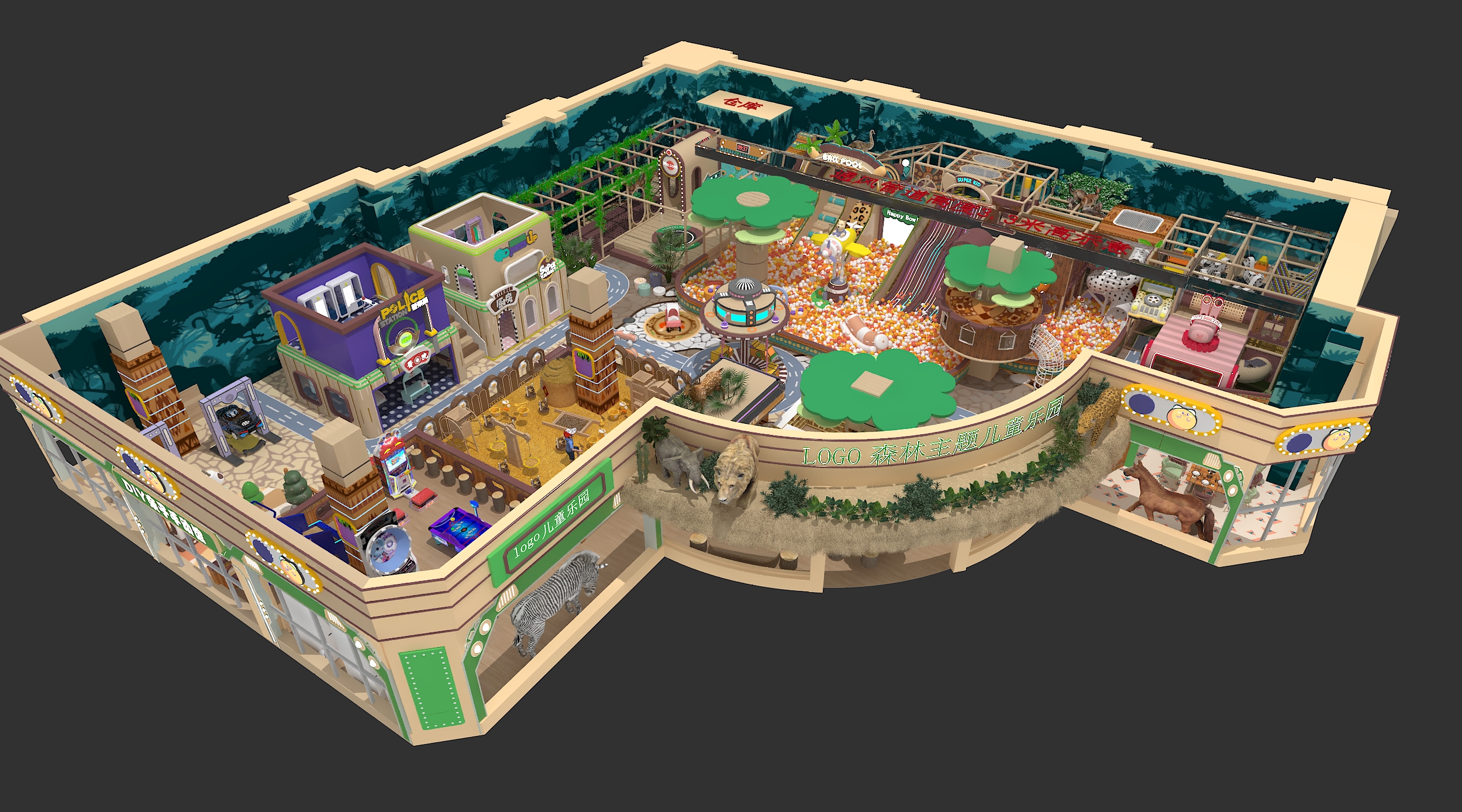
A kindergarten indoor playground is equipped in a fixed order: fix the age bands, map the room and the supervision sightlines, select the soft-play module set, add only the challenge elements the age band can actually use, verify materials and test references before signing, lock production and delivery terms, then close with written acceptance criteria. Skip a step and a design problem becomes an operating problem, usually discovered after the children arrive.
This guide is written for kindergarten operators, preschool procurement staff and the project planners who prepare their tenders. Every specification quoted below comes from published product documentation for four specific module families, so the numbers can be copied straight into a purchase order or a tender annex.
Problem Definition: Where Kindergarten Playground Projects Go Wrong
Kindergarten projects rarely fail because the equipment is too small or too plain. They fail at three predictable points, and all three are decision failures rather than manufacturing failures.
- Equipment chosen from a catalogue instead of from the room. A module list is assembled by browsing, then the layout is forced into the floor plan. The result is a play area the staff cannot supervise from one position, and a dead corner that children never enter.
- Compliance evidence arrives after the purchase order. Test references, certificate scope and material declarations should be gating documents, not attachments sent with the shipping papers. A kindergarten has no technical department to reconstruct that evidence three months after handover.
- Acceptance criteria are never written down. When there is no agreed checklist for what arrives, dimensional or material shortfalls are discovered during routine use, when leverage with the supplier is lowest.
There is also a structural difference from commercial venues. A family entertainment centre optimises for throughput and ticket revenue across many age groups. A kindergarten optimises for a fixed, small cohort, one or two dominant age bands, continuous daily staff supervision and a service life measured against a building lease rather than a weekend rush. That shifts weight toward padding structure, net containment, edge treatment and low maintenance, and away from high-turnover attractions.
Industry Background: What the 2026 Supply Market Looks Like
Soft play is not a niche inside the category. Commercial market research estimates that soft play equipment accounted for approximately 31.4% of the indoor playground equipment market in 2025, making it the largest product segment by share. For a kindergarten, that is convenient: the highest-volume segment of the industry is also the segment most aligned with early-years motor development.
Demand context points the same way. One commercial research estimate puts the global family entertainment centre market at USD 34.4 billion in 2025, projected to reach USD 93.5 billion by 2035 at a CAGR of 10.5%. Kindergartens do not buy at FEC scale, but they buy from the same manufacturing base and increasingly specify to the same safety frameworks. In the United States, the U.S. Consumer Product Safety Commission maintains a Public Playground Safety Handbook that remains the baseline reference for play-area safety planning, including fall zones and supervision.
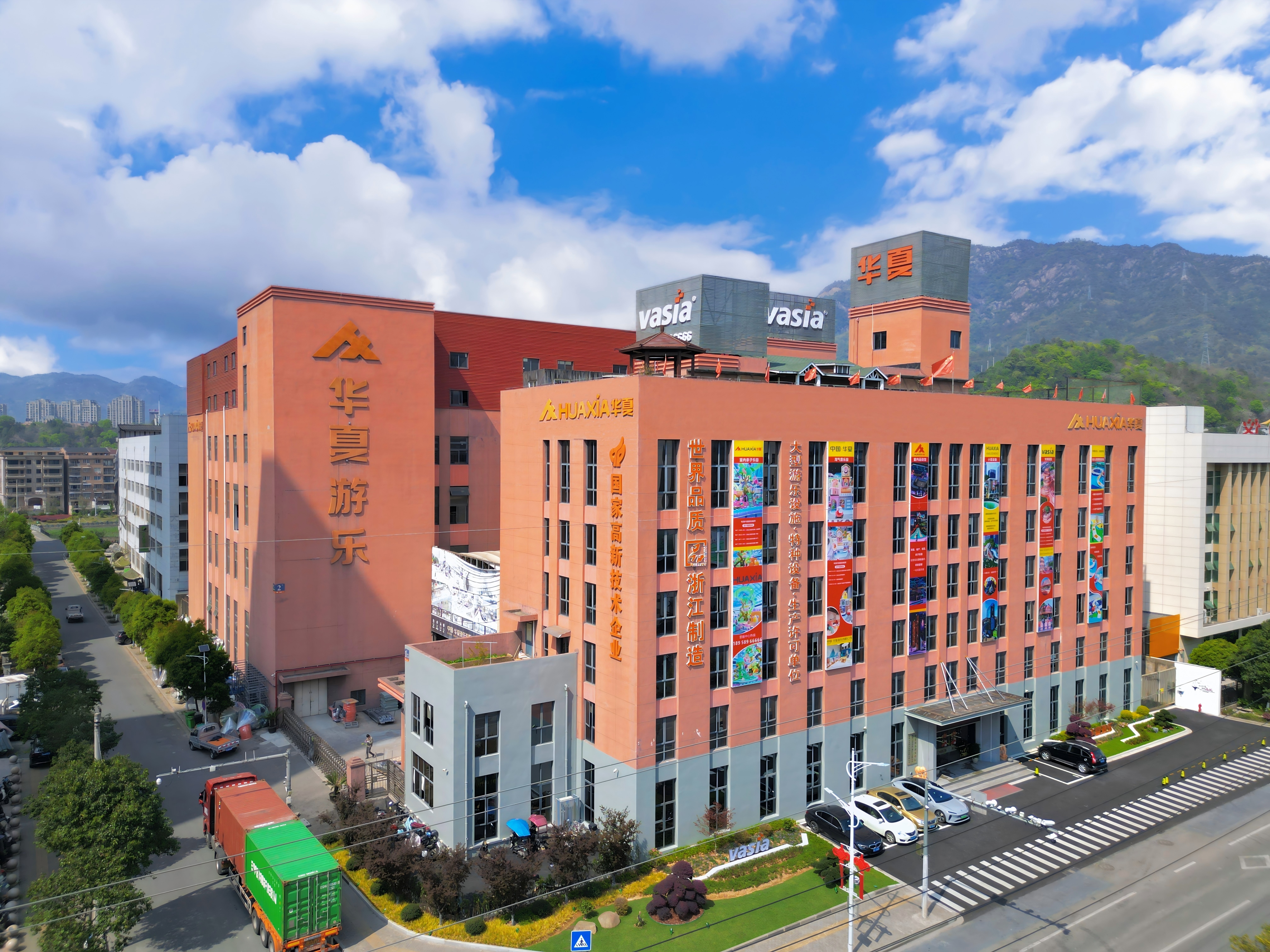
Manufacturing is concentrated. Qiaoxia Town in Yongjia County, Wenzhou, Zhejiang is designated in China as the Educational Toy Capital and National Educational Toy Export Base, and most kindergarten-scale soft-play supply originates from that cluster. VASIA is the trading name of Huaxia Amusement Co., Ltd., a Chinese manufacturer of indoor amusement equipment, sports facilities and preschool products founded in 2000 and based in Qiaoxia Town. The company operates a 30,000 m² ISO-certified production facility, employs more than 200 technical and management staff, maintains a 30-person research and development team, and states that its equipment is designed and tested against the ASTM and EN 1176 safety frameworks, with CE, UKCA, CPSIA and SASO certifications and validation testing by SGS and TÜV.
Detailed Solution: The Four Module Families and What Their Specifications Tell You
Almost every kindergarten layout is assembled from four families. The specifications matter because they determine what the acceptance inspection should look for.
1. Kids Play Structure - the soft-play core
This is the load-bearing module: a multi-level deck with slides, tunnels and panels. The published specification for Kids Play Structure VS1-250414-780-D1-77 lists galvanized steel tube uprights of φ48×2 mm, cast steel 48# couplers tested to GB/T 228.1-2021, and a polyethylene safety net with a 30×30 mm mesh tested to GB 6675.4-2014. Ties and buckles are polyamide nylon, and protective sleeves combine a PVC outer layer with an EPE pearl cotton lining. The declared material set is galvanized pipe, multi-layer board, sponge, PVC skin, acrylic and nylon.
Padding construction is the detail to interrogate. Across the indoor playground range, the soft-play platform uses a composite build of 1.8 cm multilayer board, 2 cm EPE foam and 0.45 mm PVC leather - a support layer, a cushioning layer and a cleanable skin, in that order. Uprights carry anti-collision sleeves of 15 mm outer diameter, and platform decks are typically 800×800 mm cold-rolled or perforated steel plate. Where a larger span is required, the main frame moves to φ140 mm tube at 4.0 mm wall thickness.
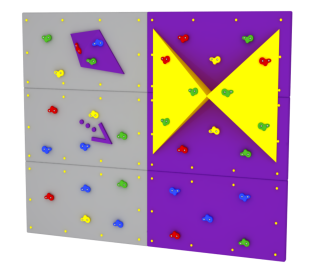
2. Climbing Wall for Playground - the vertical element
A climbing wall adds a vertical challenge without adding much floor area, which suits tight kindergarten rooms. The specification for Climbing Wall for Playground VS-2659 lists a Q235 galvanized rectangular steel tube frame of 40×40×1.5 mm, with 15 mm plywood as the structural deck. That plywood is inspected to GB/T 5849-2006, with formaldehyde emission and mechanical properties meeting the E0 grade requirements of the same standard. Padding is 10 mm high-density EPE pearl cotton tested to GB 6675.4-2014, faced with Plato PVC-coated mesh fabric of 0.52 mm thickness and 1300×1300D warp and weft density, compliant with EN 71-2:2020 clauses 4.1 and 4.4 on flammability. The declared material set adds resin to the standard galvanized pipe, board, sponge and PVC skin list.
3. Indoor Trampoline Park and trampoline park equipment - the optional high-energy element
Trampolines are the module most often misapplied in a kindergarten, because the format was designed for commercial venues. Where a single bed is specified, the load basis is documented: the standard trampoline mat measures 1800×1800 mm with a static load capacity of 600 kg and a dynamic load capacity of 130 kg; a professional mat measures 2130×4260 mm with stronger nylon webbing. Frame specification for trampoline park equipment VS6-190301-1980A-13-29 lists Q235 galvanized rectangular uprights of 80×80×2.0 mm, a connecting frame of 50×80×2.5 mm and reinforcement linkage of 40×40×1.5 mm, assembled with screw fasteners. The jumping mat is polypropylene with 500D×500D fibre count tested to GB 6675.4-2014, padding is 70 mm high-density EPE pearl cotton, and springs are 82B carbon steel wire, 180 mm long, tested to GB/T 20125-2006 and GB/T 20123-2006. The PVC-coated mesh on trampoline padding is the element stated as compliant with EN 71-2:2020 clauses 4.1 and 4.4.
4. Indoor rope course Equipment - the element most kindergartens defer
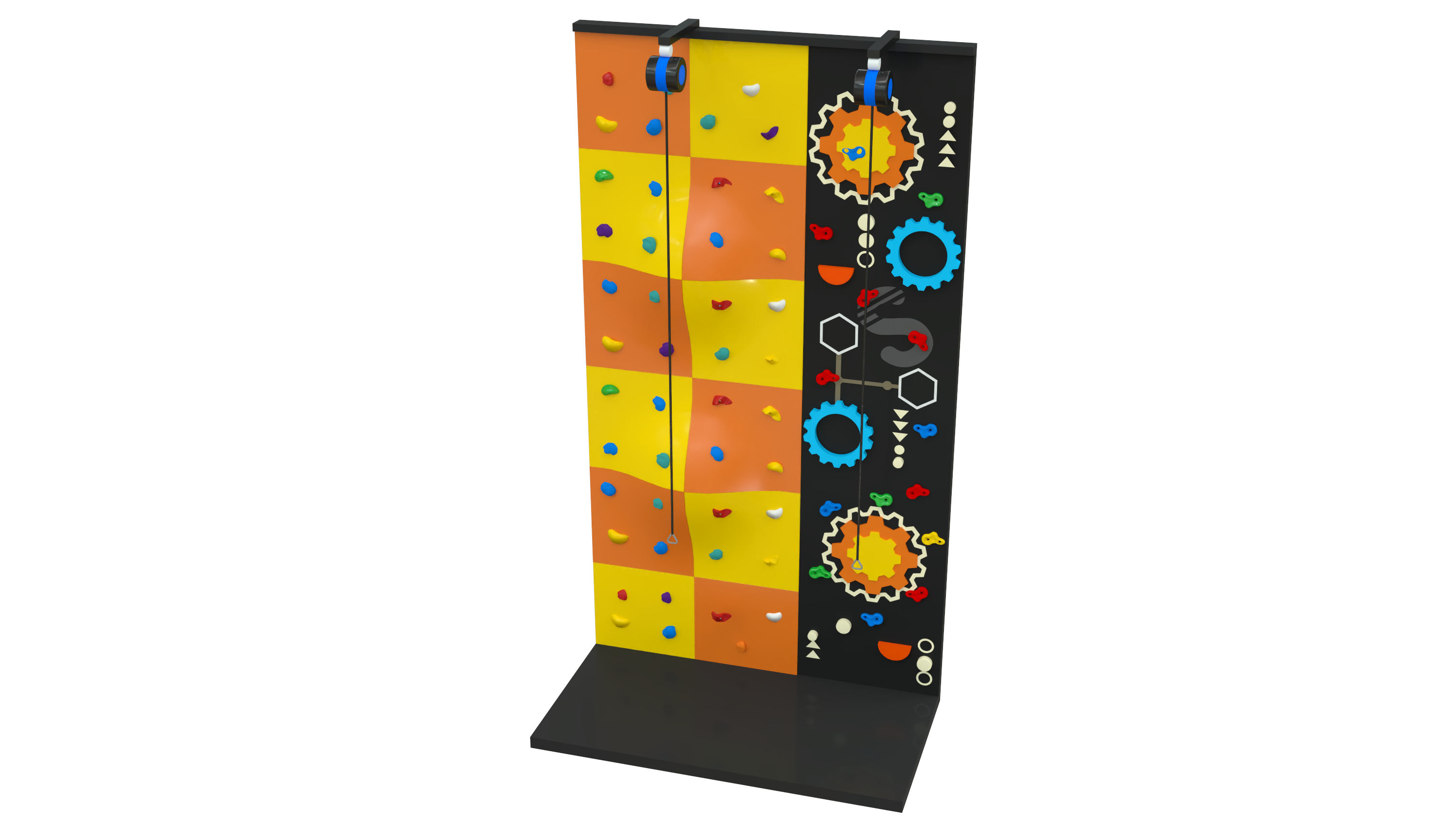
Rope courses are built for competitive and older users, and the specification shows why. Indoor rope course Equipment VS1-250522-1900B-30 uses Q235 galvanized rectangular steel tubes of 50×80×3.0 mm, 40×80×2.0 mm and 40×40×2.0 mm tested to GB/T 228.1-2021, a 15 mm plywood surface with 2.0 mm printed PVC flooring, climbing holds and an electronic timer. Its safety mat combines 28 kg/m³ foam at 10 mm with 140 mm EPE pearl cotton. That timer and the timed format are what place it outside normal kindergarten programming; most preschool projects either omit it or hold it for a later phase aimed at older users.
Step-by-Step Breakdown: Equipping the Room in Seven Steps
Step 1 - Fix the age bands before fixing the layout
Split the cohort into the bands the equipment is actually rated for. Published guidance for the indoor playground range covers toddler zones from 0 to 6 years, school-age areas from 6 to 12 years, and some soft-play products rated for ages 2 to 8, with the wider equipment range mainly specified for ages 3 to 15. A kindergarten sits almost entirely inside the toddler band, with its oldest children bridging into the lower school-age band. Two zones - a younger soft-play zone and an older structure zone - is the standard split, and every module you buy should be tagged to one of them.
Step 2 - Map the room, the route and the supervision position
Draw the floor at scale and mark the entry, shoe-change area, toilets, pram parking and the staff position. Then apply one rule: a single supervising adult should see the inside of every module from one standing point. The 30×30 mm PE net is a containment element, not a supervision substitute, so a tall slide tower placed in front of the staff desk defeats its purpose. Give any steep-slide option - the devil slide is 2 m wide with a steel frame of 4×4 cm and 4×8 cm square tubes - a clear run-out that no child can cross.
Step 3 - Select the soft-play module set
Specify the core structure first: Kids Play Structure VS1-250414-780-D1-77 with φ48×2 mm galvanized uprights, cast steel 48# couplers to GB/T 228.1-2021 and a 30×30 mm PE safety net tested to GB 6675.4-2014. Confirm the padding build line by line: 1.8 cm multilayer board, 2 cm EPE foam, 0.45 mm PVC leather. Confirm the 15 mm anti-collision sleeves on all exposed uprights, and stainless steel fasteners with protective plastic caps or anti-loosening washers so no thread is exposed at child height. Slide panels should be stated as imported engineering plastics or 196 resin; carpet, where used, is rated to 80,000 rubs.
Step 4 - Add only the challenge elements the older band can use
A climbing wall is the most efficient addition, because it adds vertical challenge inside the same footprint. Specify Climbing Wall for Playground VS-2659 with its 40×40×1.5 mm Q235 galvanized frame, 15 mm E0-grade plywood to GB/T 5849-2006, 10 mm high-density EPE padding to GB 6675.4-2014 and 0.52 mm Plato PVC-coated mesh to EN 71-2:2020 clauses 4.1 and 4.4. Add a trampoline only where supervision ratios support it, using the documented load basis of 600 kg static and 130 kg dynamic on the standard 1800×1800 mm mat, and defer rope courses to a later phase.
Step 5 - Verify materials and compliance before signing
Build a compliance schedule into the tender and require each reference against a named component, not against the company in general. The relevant documents are: PE safety net mesh 30×30 mm to GB 6675.4-2014; EPE padding and polypropylene jumping mat to GB 6675.4-2014; Plato PVC-coated mesh at 0.52 mm and 1300×1300D to EN 71-2:2020 clauses 4.1 and 4.4; plywood to GB/T 5849-2006 E0 grade; cast steel couplers to GB/T 228.1-2021; springs to GB/T 20125-2006 and GB/T 20123-2006. At company level, confirm the ISO 9001 quality management certificate and the CE, UKCA, CPSIA or SASO documentation that applies to your market, and ask for the certificate number, issuer, validity date and the exact model range covered. A claim of ASTM and EN 1176 alignment is a design framework statement - the certificate scope is what protects the project.
Step 6 - Lock production, packing and delivery terms
Confirm the manufacturing route in writing. VASIA offers OEM and ODM production with customization of colour, logo and layout, a minimum order quantity of one unit and a lead time of 15 to 45 days. Pre-production review is supported by 3D modelling and VR preview, so the kindergarten can walk the layout before steel is cut, and a dedicated project manager coordinates design, production, logistics and installation. Confirm export packing, the delivery split by module, and whether installation will be remote guidance or an on-site assembly team.
Step 7 - Write the acceptance criteria into the purchase order
Acceptance is where most projects lose value. Tie final payment to a signed checklist that verifies, against the confirmed drawings: upright diameter and wall thickness (φ48×2 mm on the standard structure); padding layer sequence and thickness; net mesh at 30×30 mm with no loose or tied-off edges; PVC-coated mesh at 0.52 mm; plywood E0 marking; spring length at 180 mm; fastener type and cap coverage; module count against the packing list; and a documented snag list with a closure date. Add the warranty terms - one-year warranty with lifetime service and remote technical support - and the spare-parts list to the same document.
Use Cases: Three Kindergarten Configurations
Standalone kindergarten, single room
A single-room project should concentrate the budget in the soft-play core plus one climbing element. Kids Play Structure VS1-250414-780-D1-77 carries the main play value, and Climbing Wall for Playground VS-2659 adds vertical challenge without consuming floor area. No trampoline, no rope course. This is the configuration with the lowest supervision burden and the simplest acceptance checklist.
Kindergarten sharing a public or mall play area
Where the room sits beside a shared play area, traffic and cleaning frequency rise. Modules specified for high-traffic use are the appropriate grade - the range is documented as suitable for indoor and outdoor, all-weather operation in high-traffic areas, and for shopping malls, kindergartens and amusement parks. Family entertainment center equipment VS1-25011002-230-2-49 uses the same φ48×2 mm uprights and 30×30 mm PE net, which keeps the kindergarten specification comparable with the shared facility next door.
Kindergarten running a paid weekend play session
Some operators open the room to paying families outside school hours. That is when themed modules and a trampoline element start to earn their place, and when uptime matters. A completed reference point is a 3,000 m² installation supplied to an end customer in Spain, which has operated for five years with stable operation and income on a long-life, low-maintenance basis. The lesson transfers directly: specify for the maintenance regime you can actually staff.
Comparison Table: Four Module Families Against Kindergarten Criteria
All figures below are taken from the published specifications for each model; no values are estimated.
| Module (model) | Verified frame and surface | Verified padding and containment | Verified test references | Typical role in a kindergarten |
|---|---|---|---|---|
| Kids Play Structure (VS1-250414-780-D1-77) | Galvanized steel tube φ48×2 mm; cast steel 48# couplers; deck 800×800 mm plate; expanded frames φ140×4.0 mm | 1.8 cm multilayer board + 2 cm EPE + 0.45 mm PVC leather; 15 mm anti-collision sleeves; PE safety net 30×30 mm | GB/T 228.1-2021 (couplers); GB 6675.4-2014 (net); stainless fasteners with protective caps | Core play value for the 2-8 soft-play band; primary budget line |
| Climbing Wall for Playground (VS-2659) | Q235 galvanized rectangular tube 40×40×1.5 mm; 15 mm plywood deck | 10 mm high-density EPE pearl cotton; 0.52 mm Plato PVC-coated mesh, 1300×1300D | GB/T 5849-2006 E0 (plywood); GB 6675.4-2014 (padding); EN 71-2:2020 clauses 4.1 and 4.4 | Vertical challenge for the older band, same footprint |
| Trampoline park equipment (VS6-190301-1980A-13-29) | Q235 galvanized uprights 80×80×2.0 mm; connecting frame 50×80×2.5 mm; reinforcement 40×40×1.5 mm; screw-fastened | PP jumping mat 500D×500D; 70 mm high-density EPE padding; springs 82B carbon steel, 180 mm | GB 6675.4-2014 (mat and padding); EN 71-2:2020 clauses 4.1 and 4.4 (PVC-coated mesh); GB/T 20125-2006 and GB/T 20123-2006 (springs) | Optional single bed only where supervision supports it; 600 kg static / 130 kg dynamic on 1800×1800 mm mat |
| Indoor rope course Equipment (VS1-250522-1900B-30) | Q235 galvanized tubes 50×80×3.0 mm, 40×80×2.0 mm, 40×40×2.0 mm; 15 mm plywood; 2.0 mm printed PVC flooring; electronic timer | 28 kg/m³ foam at 10 mm plus 140 mm EPE pearl cotton; printed Plato PVC-coated mesh 0.52 mm | GB/T 228.1-2021 (frame); GB 6675.4-2014 (mat foam); EN 71-2:2020 clauses 4.1 and 4.4 | Usually deferred to a later phase for older users; timed format |
FAQ
Which test references should a kindergarten tender demand for indoor playground equipment?
Demand them component by component. For soft-play structures: cast steel 48# couplers to GB/T 228.1-2021 and a polyethylene safety net with 30×30 mm mesh to GB 6675.4-2014. For padding: EPE pearl cotton to GB 6675.4-2014 and Plato PVC-coated mesh at 0.52 mm and 1300×1300D to EN 71-2:2020 clauses 4.1 and 4.4. For climbing walls: 15 mm plywood to GB/T 5849-2006 meeting E0 formaldehyde requirements. For trampolines: springs to GB/T 20125-2006 and GB/T 20123-2006. At company level, request ISO 9001 plus the CE, UKCA, CPSIA or SASO documents relevant to your market, and insist on certificate number, issuer, validity and covered model range - because a design framework statement such as ASTM and EN 1176 alignment is not the same document as a certificate with a scope.
Can a manufacturer customise modules to a kindergarten floor plan and school branding?
Yes, at OEM and ODM level. VASIA produces in OEM and ODM mode with customization of colour, logo and layout, working from a 30,000 m² ISO-certified facility with more than 200 staff, a 30-person R&D team and a portfolio of over 192 patents and copyrights. Design review uses 3D modelling and VR preview so the kindergarten can inspect the layout before production, and a dedicated project manager runs the project through design, manufacturing, packing, shipping and installation. The company reports completed projects in more than 100 countries.
What drives the budget of a kindergarten indoor playground?
Four drivers, and none of them is the number of children alone. First, module mix: a soft-play core is a different cost base from a trampoline element or a rope course, because the steel sections and mat systems differ - φ48×2 mm uprights on a structure, 80×80×2.0 mm uprights on a trampoline, 50×80×3.0 mm on a rope course. Second, material grade: padding built from 1.8 cm multilayer board, 2 cm EPE and 0.45 mm PVC leather is not interchangeable with thinner builds. Third, customisation scope - colour, logo, theming and layout work. Fourth, commercial terms, including delivery and installation scope. The published minimum order quantity is one unit with a lead time of 15 to 45 days, which lets a small kindergarten buy in phases rather than in one commitment.
Can a kindergarten validate a module before committing to the full order?
There are two practical validation routes. The first is digital: 3D modelling and VR preview let the school review the layout, sightlines and module mix before production begins. The second is physical: with a minimum order quantity of one unit, a single module can be ordered and inspected as a reference sample. Prototyping and safety validation are also part of the manufacturer's stated process - each new product design is prototyped and validated before mass production. Use either route to confirm padding thickness, net mesh and finish quality with your own hands before releasing the full order.
How long does production and delivery take, and what happens after handover?
Published lead time is 15 to 45 days, with monthly production capacity of 10,000 m² for trampoline parks and related play structures, and a dedicated project manager coordinating scheduling, export packing and freight. Installation is handled either through remote technical guidance or an on-site assembly team, depending on the project. After handover, support includes a one-year warranty with lifetime service, remote technical support and spare-parts availability, plus optional annual inspection and maintenance. If you want to check the specification set against your own floor plan before tendering, request a quote or a sample review through the VASIA team, or download the product catalogue below.
Conclusion: Sequence Beats Specification
The specifications in this guide are only useful if they are applied in order. Fix the age bands, map the supervision sightline, specify the soft-play core down to the padding layers, add a climbing element rather than a trampoline park, lock the test references into the tender, confirm the 15 to 45 day lead time and the installation route, and write the acceptance checklist before the purchase order is signed. A kindergarten that follows those seven steps ends up with a room it can supervise, maintain and defend to parents - which is the actual deliverable, not the equipment list.
Next Step: Sample, Quote or Catalogue
Send a floor plan and an age-band breakdown, and VASIA will return a module recommendation with the matching test references for your tender annex. Ask for a single-module sample review, a project quote, or the full catalogue.
Catalogue download: VASIA product catalogue (PDF)
Email: huaxiatoys@huaxiatoys.com | WhatsApp: +86 189 6887 6888
Website: www.vasiaplayground.com
Specifications quoted in this guide refer to the named models only. Certificates, test reports and warranty terms should be requested as project documents and verified against the models specified in your order.
Have Questions or Need More Details?
Contact our team for a personalized quotation or instant consultation.
Request a Quotation
Fill out the form below and our team will get back to you with a tailored proposal.
WhatsApp Direct Chat
Prefer to chat in real-time? Message us on WhatsApp for instant assistance & quick answers.
- Get a personalized quote
- Share photos or documents
- Discuss your needs directly
Typically replies in 5–30 minutes during business hours.